
Use table occupancy intelligence to improve dining room operations and support fraud detection in restaurant payment flows.
Business challenge
Restaurants can lose revenue not only through inefficient table utilization, but also through weak visibility between table occupancy, billing events, and payment execution.
Product approach
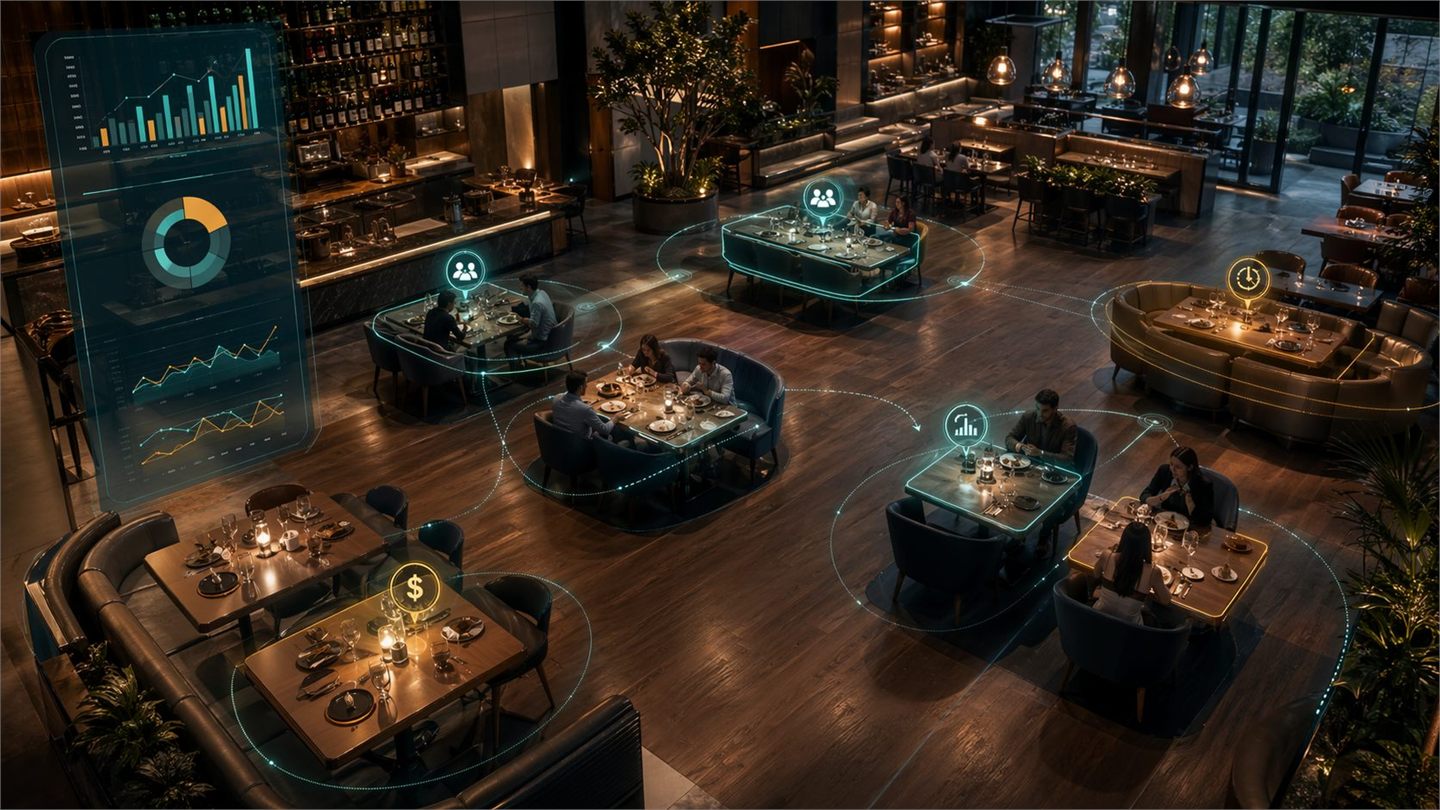
Table Service turns dining room activity into clear, usable business intelligence. It helps restaurant teams understand table usage, improve front-of-house decisions, and create stronger visibility between service activity and payment flows.
How it works
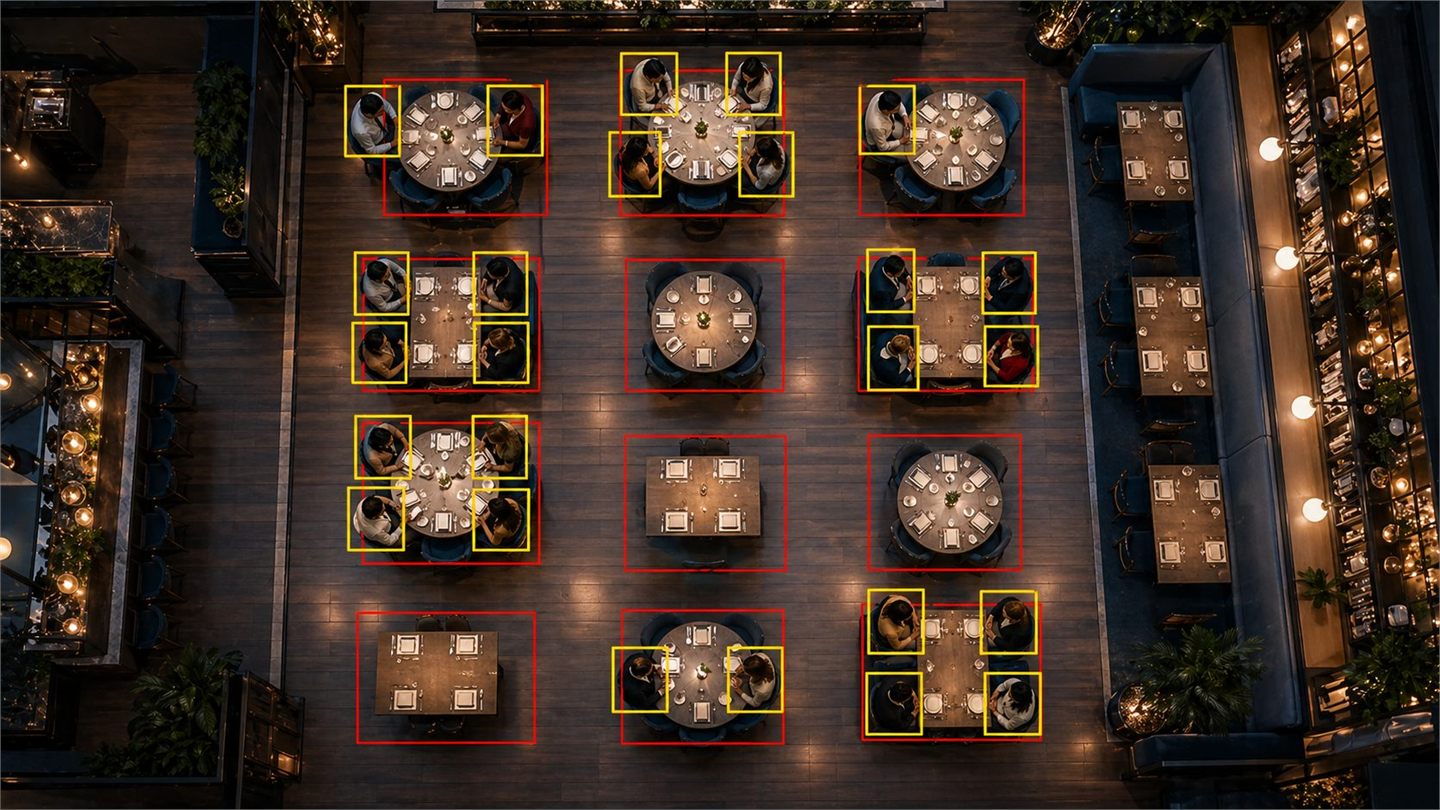
Table Service monitors table occupancy, dwell time, and turnover through AI-powered camera analysis, then converts those signals into dashboards, alerts, and business rules.
Why it matters
Table Service helps restaurants move from manual observation to measurable, repeatable visibility over service flow and payment integrity.
Key benefits
- Clear visibility into occupancy, dwell time, and table turnover
- Better host stand, floor, and staffing decisions
- Stronger control over table closure and payment consistency
- Scalable monitoring across one or multiple locations
Target industries
Overview
Table Service is HorusSense's restaurant intelligence solution for understanding what is happening on the floor in real time. It gives operators a clearer view of table occupancy, dwell time, and turnover, while also supporting stronger control over how service activity connects to billing and payment events.
Key Capabilities
- Real-time visibility into occupied, available, and inactive tables
- Dwell time and turnover tracking across the service window
- Operational dashboards for floor performance and guest flow
- Exception visibility for billing and payment review
- Support for single-site and multi-site restaurant operations
Core Capabilities
Control Capabilities
Integration Capabilities
Operational categories by camera coverage
Table Service can be positioned in practical deployment tiers depending on how many cameras are used to cover the dining room:
- Single-camera coverage: best for smaller dining rooms or focused service zones where one camera can track occupancy and basic turnover with low setup complexity.
- Multi-angle coverage: ideal when two or three cameras observe the same tables from different perspectives to reduce blind spots and improve table-state integrity.
- Extended floor coverage: suited for larger restaurants or multi-zone layouts where several cameras are required to maintain a consistent operational map across the full room.
These categories help align expectations around setup effort, table mapping quality, and the level of operational intelligence the restaurant can activate.
Why restaurants care
Restaurants need more than cameras. They need a business view of what happens at each table. Table Service helps teams reduce blind spots around:
- Slow table turnover
- Long guest wait times
- Uneven floor performance
- Missed revenue opportunities
- Inconsistencies between table activity, billing, and payment
Commercial value
With a more accurate picture of dining room activity, Table Service helps restaurants improve:
- Host stand decisions and seating flow
- Waitlist management and guest experience
- Floor management during peak and off-peak hours
- Staffing and service allocation
- Revenue capture through better table utilization
- Confidence in payment and table-close consistency
Anti-fraud positioning
One of Table Service's strongest commercial applications is payment-control visibility. Instead of relying only on visual detection of a payment terminal, Table Service uses the table lifecycle itself as the business reference point:
- When a table becomes occupied
- When the table is cleared or closed
- Whether billing or POS activity exists for that table
- Whether payment timing and value are consistent with the table journey
This makes Table Service valuable not only as an operational tool, but also as a control layer for audit, exception review, and fraud prevention.
Payment control workflow
Within Table Service, payment control should be understood as one of the solution's most concrete operational expressions. Before a restaurant can review payment inconsistencies, it needs a clear operational map of cameras, tables, and the events associated with each table journey.
The workflow typically begins with:
- Registering the site in HorusSense
- Running the camera and table discovery process
- Identifying tables visible in the environment
- Adding those tables to the operating list used for later analysis
Once that base layer is in place, Table Service can turn discovery into reporting through:
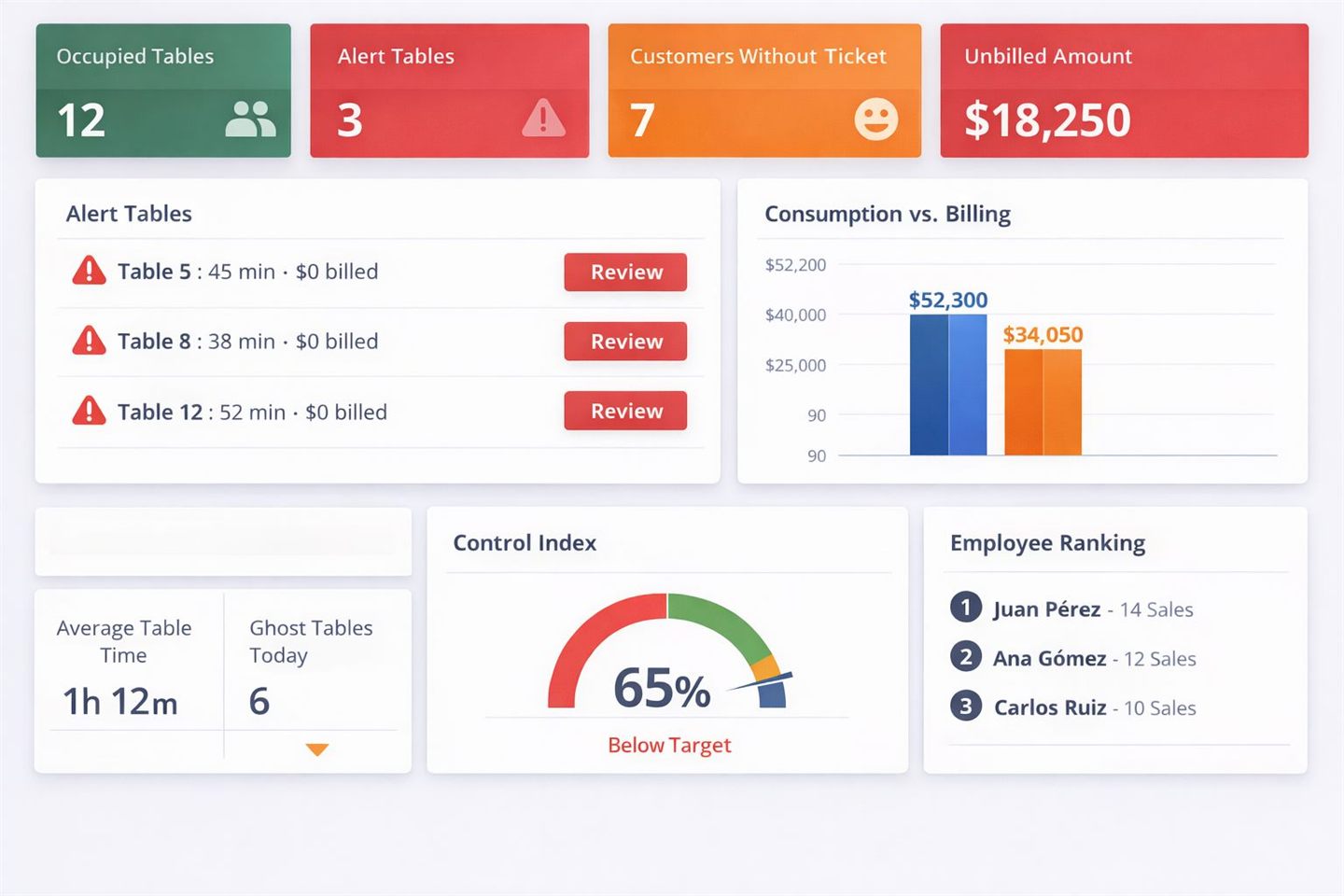
- Table-utilization reports
- Anomaly reports for detected exceptions
- Correlation between table activity, billing, and payment behavior
That progression is what allows payment control to move from isolated suspicion to a measurable operational workflow.
POS integration options
The Table Service concept can integrate with billing and payment systems in different ways depending on the customer environment:
- Direct POS APIs when the restaurant already exposes structured billing events
- Connector-based integrations for fragmented or multi-vendor POS environments
- Passive ticket or print listeners in legacy restaurant setups
- Visual OCR-based fallback when technical integration is limited or unavailable
This gives HorusSense flexibility to adapt from lightweight pilots to more robust enterprise-grade payment-control deployments.
Dashboard evolution
As the deployment matures, Table Service can evolve from discovery and exception reporting into a broader operational dashboard that combines utilization, anomalies, and payment-control indicators in one business view.
Built for real restaurant environments
Table Service is designed for real dining rooms, including sites with multiple camera angles, changing floor layouts, and different service rhythms throughout the day. It can support both individual restaurants and larger groups that need comparable visibility across locations.
Multi-camera table integrity
When multiple cameras observe the same group of tables, Table Service is designed to preserve a single logical identity for each table rather than treating every angle as a different object. That enables:
- Consistent occupancy tracking across overlapping camera views
- Better correlation between physical table state and billing events
- Cleaner anomaly analysis when the same table appears from different perspectives
The same operational logic can also evolve to handle joined tables or layout changes, so the restaurant maintains a reliable floor map even when service configurations shift during the day.