
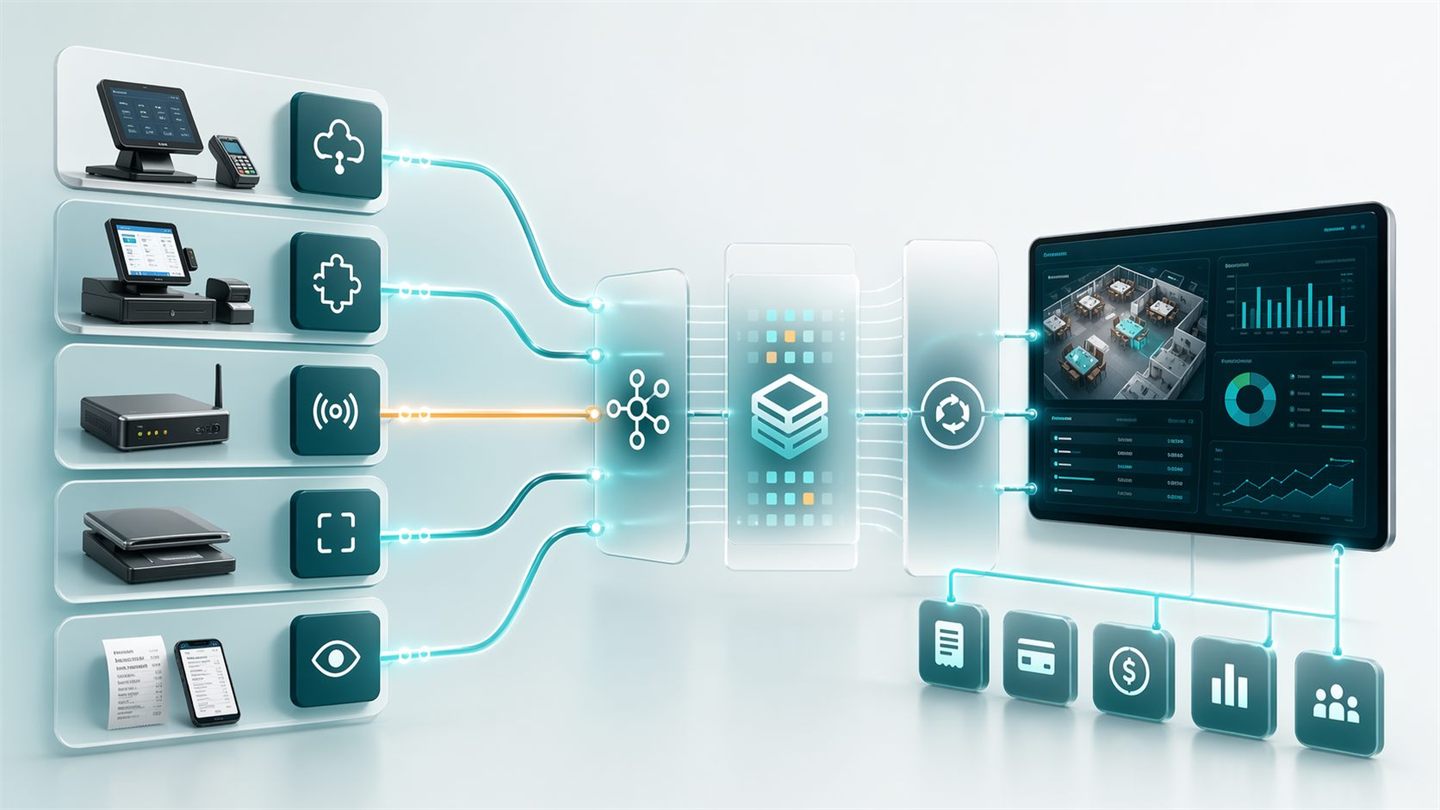
A Table Service platform capability for connecting billing and payment events through APIs, connectors, passive listeners, or OCR fallback.
Operational need
Restaurants operate across different POS vendors, integration models, and technical constraints.
Table Service capability
Table Service supports multiple POS-integration paths so billing and payment events can still be normalized into one platform workflow.
How it works
The feature can work with direct POS APIs, connector-based integrations, passive ticket or print listeners, and OCR-based fallback models.
Why it matters
POS Integration is what allows occupancy intelligence to connect with real commercial signals such as billing, totals, and payment timing.
What this enables
- Faster adoption across mixed POS environments
- Flexibility from pilots to enterprise deployments
- Better linkage between operations and billing
- Stronger support for payment-control solutions
Best fit
Overview
POS Integration is the platform bridge between Table Service's visual understanding of the floor and the billing systems restaurants already use.
Integration paths
- Direct POS APIs
- Connector-based integration layers
- Passive print or ticket listeners
- OCR-based fallback
Why it matters
Without billing and payment events, occupancy remains useful. With them, Table Service becomes a much stronger operational and control platform.